
34
Mock Tests
Available Now
🚀 Loading Excellence...
Master 28. Urdu Paper 2 with Complete Material (Subject Code 30).
UGC NET 28. Urdu Syllabus 2026 - Unit-wise Breakdown
| Unit | AREA / PERIOD | Key Topics | IMPORTANT WRITERS / POETS |
|---|---|---|---|
|
Unit 1: Classical Urdu Poetry
|
Early & Classical Period
|
Ghazal, Qasida, Marsiya, Masnavi, Classical poetic forms
|
Mir Taqi Mir, Sauda, Ghalib
|
|
Unit 2: Modern Urdu Poetry
|
Reform & Progressive Era
|
Nazm, Free Verse, Progressive Movement, Symbolism
|
Allama Iqbal, Faiz Ahmed Faiz, Firaq Gorakhpuri
|
|
Unit 3: Urdu Fiction
|
Novel & Short Story
|
Development of Urdu Novel, Afsana, Realism, Modern Fiction
|
Premchand, Qurratulain Hyder, Saadat Hasan Manto
|
|
Unit 4: Drama & Literary Movements
|
Urdu Drama
|
Classical & Modern Drama, Literary Trends, Progressive Writers Movement
|
Agha Hashr Kashmiri, Imtiaz Ali Taj
|
Key authors you need to know for UGC NET 28. Urdu
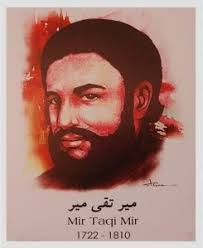
Mir Taqi Mir is regarded as one of the greatest classical poets of Urdu literature. He played a foundational role in shaping the Urdu ghazal and is known for his emotional depth and simplicity of expression.
Key Works: Kulliyat-e-Mir, Zikr-e-Mir, Diwan-e-Mir
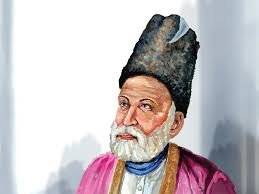
Mirza Ghalib is one of the most influential poets in Urdu and Persian literature. His poetry is known for philosophical depth, complex metaphors, and intellectual expression.
Key Works: Diwan-e-Ghalib, Urdu Letters (Urdu-e-Mualla)
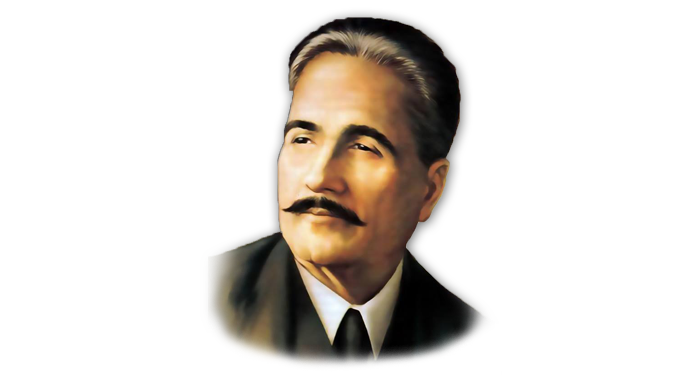
Allama Iqbal was a philosopher, poet, and political thinker whose poetry inspired intellectual awakening in the Muslim world. He contributed significantly to modern Urdu poetry.
Key Works: Bang-e-Dra, Bal-e-Jibril, Asrar-e-Khudi, Zarb-e-Kalim
UGC NET 28. Urdu 2026 is the subject-specific paper (Paper 2) conducted by NTA for candidates aspiring to become Assistant Professors or qualify for Junior Research Fellowship (JRF) in the field of Urdu. The exam evaluates a candidate’s in-depth knowledge of Urdu language, literature, poetry, prose, criticism, linguistic development, and literary movements.
UGC NET Urdu Paper 2 consists of 100 multiple-choice questions carrying 200 marks. The exam is conducted in Computer-Based Test (CBT) mode, and there is no negative marking. The duration of the examination is 3 hours (combined with Paper 1).
The syllabus covers classical and modern Urdu literature, Sufi influence, literary criticism, history of Urdu language, research methodology, and contemporary trends in Urdu writing.
UGC NET Urdu (Code 28) is designed to assess a candidate’s comprehensive understanding of Urdu as a language and as a literary tradition. It ensures that candidates possess strong analytical, interpretative, and research skills required for higher education teaching and academic research.
🔹 Key Highlights:
This paper plays a crucial role in determining final qualification, as marks obtained in Paper 2 significantly impact overall merit.
Start with fundamental concepts, major topics, and their applications. Build a strong theoretical foundation before moving to advanced topics.
Learn key theories and concepts. Understand major principles and their applications. Focus on high-weightage topics.
Solve previous year papers and practice MCQs regularly. Focus on high-weightage units. Practice identifying key concepts and applications.
Focus on major topics from high-weightage areas. Use summaries for less important topics. Focus on concepts and applications.
Regular mock tests help in self-assessment, identifying weak areas, and improving speed and accuracy under exam conditions. Aim for at least 10 full-length tests.
Create concise notes for quick revision. Include key concepts, theories, and important points. Use diagrams and flowcharts for better understanding.
by Edward Albert
Comprehensive coverage of all periods from Old English to Contemporary literature.
by Terry Eagleton
Excellent introduction to literary theory and criticism with clear explanations.
by Arihant Experts
Specifically designed for UGC NET with complete syllabus coverage and practice questions.